What Are the Dangers of Replacing Copper with Aluminum in Transformers?
Investigations into the causes of multiple power accidents have found that the practice of replacing copper with aluminum in distribution transformers continues despite repeated prohibitions. Because this practice is difficult to detect, it is hard to identify from the finished product's appearance or terminals after manufacturing, and the tests required by current standards may not reveal it. In addition, lifting the core for a teardown inspection is destructive, difficult to carry out, and uneconomical.
Investigations into the causes of multiple power accidents have found that the practice of replacing copper with aluminum in distribution transformers continues despite repeated prohibitions. Because this practice is difficult to detect, it is hard to identify from the finished product’s appearance or terminals after manufacturing, and the tests required by current standards may not reveal it. In addition, lifting the core for a teardown inspection is a destructive method that is difficult to carry out and uneconomical.
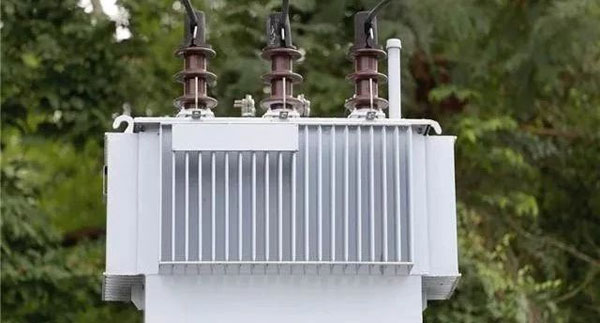
Transformer fraud: replacing copper with aluminum to pass off an inferior product as a superior one
Users of distribution transformers are found in many fields, including industrial manufacturing, real estate, high-speed rail, transportation, and renewable-energy generation. Users have less information about transformers than transformer manufacturers, creating an information imbalance. Numerous cases show that many transformers in which copper has been replaced with aluminum have entered the market through various channels, including in major cities such as Shanghai, leaving potential safety hazards.
- Current situation and hazards of replacing copper with aluminum in transformers
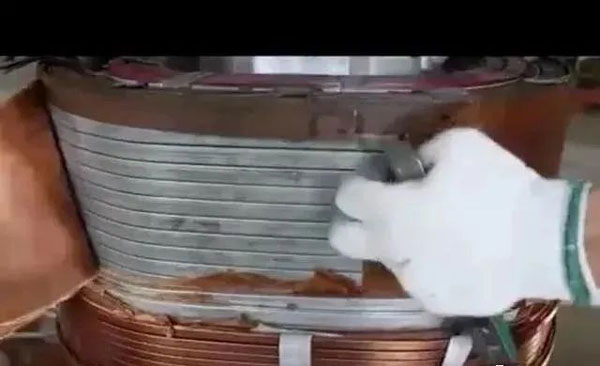
“Replacing copper with aluminum” in transformers refers to the use of aluminum, aluminum alloy, or copper-clad aluminum in distribution-transformer windings in place of copper, without accurately identifying the material on the nameplate.
① Transformers with copper replaced by aluminum endanger the lives, physical safety, or property of unspecified persons or the public. From a criminal-law perspective, this constitutes the crime of endangering public safety and is a serious offense.
Dry-type transformers are commonly used in high-rise buildings, commercial complexes, libraries, airports, data centers, factories, and other public or heavily occupied settings. A fire or explosion in such a location would inevitably cause major loss of life and property. An explosion involving a large oil-immersed transformer would likewise be a major disaster.
② Transformers with copper replaced by aluminum threaten the implementation of China’s Belt and Road Initiative. During Belt and Road construction, there have already been scandals involving repeated explosions of transformers with copper replaced by aluminum in Nepal, and the people involved were sentenced by a Nepalese court. If such incidents continue to occur, the reputation of “Made in China” will suffer devastating damage, particularly because Chinese power-engineering contracting has become a highlight of China’s Belt and Road Initiative.
③ Transformers with copper replaced by aluminum pose a major threat to China’s goal of becoming a manufacturing powerhouse. If Chinese manufacturing cannot uphold even the most basic standards, and counterfeit medicines, food, and industrial products, as well as piracy, become rampant, it will be impossible to build a manufacturing powerhouse on that foundation. A high-rise built on sand will eventually collapse. Fighting counterfeit industrial products and industrial fraud is therefore an important part of building China into a quality powerhouse.
④ Transformers with copper replaced by aluminum can severely devalue the assets of industrial enterprises and renewable-energy projects. If an enterprise’s assets include such transformers, those assets are substantially devalued, carry high risks, and are likely to cause problems sooner or later. If many such assets enter the balance sheets of any project or enterprise, they pose a major potential threat to the enterprise and the project.
- How to identify transformers in which copper has been replaced by aluminum
As the table below shows, a transformer with aluminum in both its high- and low-voltage windings weighs 55 kg more overall than an all-copper transformer. This is mainly because its active-part weight, oil weight, tank weight, and active-part volume are all greater. The same principle applies to a transformer with aluminum high-voltage conductors and copper low-voltage conductors.
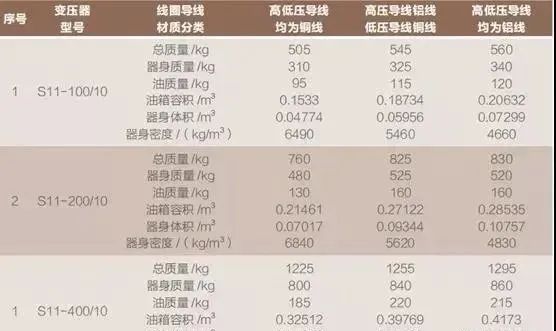
Data excerpted from: A Study of Nondestructive Methods for Identifying the Winding Materials of Power Transformers
Theoretically, it is possible to determine whether a transformer uses aluminum windings by taking measurements and analyzing data for transformers from the same manufacturer. In practice, however, manufacturing methods, designs, processes, and materials differ among manufacturers. There are also various configurations, such as aluminum replacing copper in the high-voltage windings, in the low-voltage windings, or copper-clad aluminum. As a result, there is no corresponding reference data, making the determination difficult.
For transformer users, post-purchase testing is a reactive measure. Once a case of copper being replaced by aluminum is discovered, the cost of handling it is high. The best approach is to arrange testing and seek the necessary advice before purchase, thereby avoiding the procurement of a transformer in which copper has been replaced by aluminum.
Industry experts believe users can be advised about the price conditions under which manufacturers might substitute aluminum for copper, which manufacturers might do so, and which companies offer reliable transformer quality. In addition, power-grid companies, as major professional transformer purchasers, have substantial experience in transformer quality management that can serve as a useful reference for users in other industries.
The investigation also found that many users’ transformer procurement contracts are very simple. If a case of copper being replaced by aluminum occurs, the contract may provide no basis for a claim or method for calculating compensation, making it difficult to seek compensation and leaving users with heavy losses.
Industry professionals recommend adding appropriate compensation clauses to transformer purchase contracts, with increased liability and compensation amounts. These should cover direct losses, indirect losses, lost profits, attorneys’ fees, transportation costs, testing fees, court litigation and enforcement costs, daily losses from suspended work and production, replacement costs, labor costs incurred in pursuing a claim, and other costs. If these losses are difficult to estimate, an amount based on experience can be specified in the contract together with enhanced liability provisions. The contract should stipulate that, throughout the transformer’s entire life cycle, if copper is found to have been replaced by aluminum, the relevant suppliers, intermediaries, contractors, and manufacturing enterprises bear unlimited joint and several liability for compensation. It may also stipulate that, if such a substitution is discovered, the legal representative of the transformer manufacturer bears lifelong unlimited joint and several liability for compensation.
- Is replacing copper with aluminum viable in power transmission?
According to the research report Strategic Planning for the Application of China’s Copper and Aluminum Resources in the Power Cable Market, issued by the Research Institute for Resources and Environmental Policies of the Development Research Center of the State Council, a comparative analysis of copper, aluminum, and aluminum-alloy conductors and cables concluded that replacing copper with aluminum is not advisable in power transmission.
Experience from power-grid operation shows that 80% of power-cable faults occur at joints. In this respect, copper has incomparable advantages over aluminum and aluminum alloys: even when oxidized, the resulting copper oxide remains a good conductor and can ensure electrical connection performance at joints and terminals. By contrast, even when aluminum-alloy cables are installed using good workmanship, oxidation at joints or terminals produces aluminum oxide, an insulator. This degrades the conductivity of the joint or terminal, causing it to heat up and thereby intensifying the oxidation.
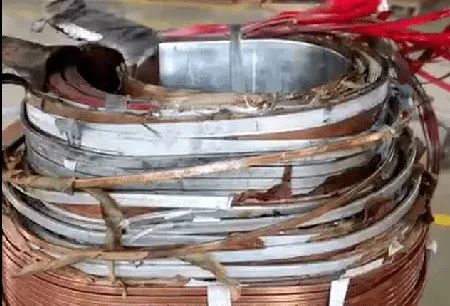
Many power accidents are accompanied by fires. A fire in a power cable generally begins with an abnormal temperature rise caused by excessive Joule heating. Common causes include increased resistance at cable joints, aging insulation, leakage to ground, and leakage between conductors. The rise in cable temperature in turn intensifies the conditions that cause overheating, creating positive feedback and making cables highly vulnerable to fire. Once a cable fire starts, flames spread fiercely and rapidly; large quantities of harmful gases are produced during combustion, making firefighting difficult. The affected cable circuit is not the only one at risk—other cables in the cable trench may also be affected. Once cables are burned out, repairs take a long time and the losses are severe.
In short, many people in the industry regard the substitution of aluminum for copper in transformers merely as a decline in industrial-product manufacturing quality caused by low prices. In reality, it is a major social problem whose harm is far greater than people expect. As with counterfeit medicines and food, it must not be tolerated or left unaddressed until a “big-headed baby” is born or an explosion involving a transformer in a company or residential high-rise causes serious consequences before strict penalties are introduced.
Fighting the practice of replacing copper with aluminum in transformers is a responsibility, an obligation, and a duty entrusted to us by our times.